
Welcome to Health Policy Institute
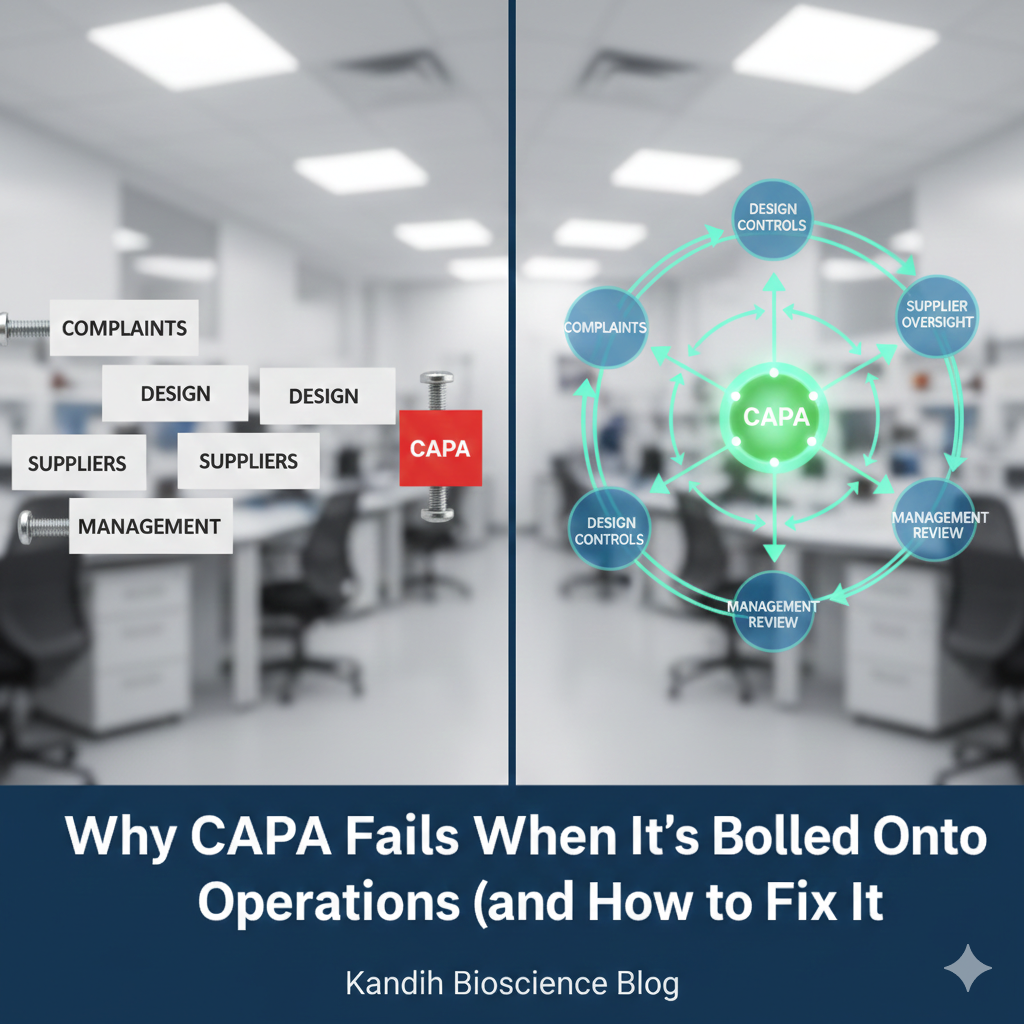
CAPA—Corrective and Preventive Action—is one of the most misunderstood systems in regulated operations. Many organizations treat it as a form, a file, or a QA task. Regulators do not. At HPI, we approach CAPA as a system-level risk control mechanism—one that only works when it is intentionally designed into operations, policies, and leadership oversight. CAPA (Corrective and Preventive Action) is a structured system used to identify, investigate, correct, and prevent recurring or systemic failures that could impact safety, quality, or compliance. Effective CAPA programs are risk-based, cross-functional, and integrated into daily operations—not isolated within Quality Assurance.
"What CAPA Actually Means."CAPA has two distinct but connected functions: Corrective Action Actions taken to eliminate the root cause of an identified problem to prevent recurrence. Examples: Repeated documentation errors Complaint trends indicating process breakdown Supplier failures affecting service quality Preventive Action Actions taken to eliminate the root cause of a potential problem before it occurs. Examples: Risk signals identified during audits Trend analysis showing emerging issues Process weaknesses uncovered through management review Regulators expect organizations to demonstrate both—not just corrective clean-up.Why CAPA Exists in Healthcare & Regulated Businesses CAPA is required because isolated fixes don’t protect patients, clients, or organizations. In healthcare, staffing agencies, RSA providers, and regulated service environments, CAPA ensures that: Issues are not repeatedly “fixed” without learning Risks are evaluated, not assumed Leadership is accountable for systemic failures Compliance is sustainable, not reactive CAPA is a learning system, not a punishment system. Where CAPA Fits in an Organization (And Where It Often Goes Wrong)
From a regulatory perspective, CAPA sits at the intersection of: Complaint handling Incident and deviation management Internal audits Risk management Supplier and third-party oversight Management review The most common mistake HPI sees is CAPA being positioned after everything else—as a final step once damage is done. When CAPA is bolted on instead of built in: Root causes are shallow Actions fix paperwork instead of controls Effectiveness checks measure completion, not risk reduction Inspections result in repeat findings CAPA Is Not a Training Problem Organizations often respond to CAPA failures by retraining staff or rewriting SOPs. While training matters, training does not fix poorly designed systems.
If: Complaints are poorly triaged Risk is not evaluated consistently Policies don’t guide escalation Management review lacks decision authority CAPA will fail—regardless of staff competence. This is a design problem, not a people problem. How HPI Designs Effective CAPA Systems HPI supports healthcare and regulated organizations by building CAPA into operational design, not treating it as an afterthought. 1. Policy & Procedure Development We create clear, risk-based policies that define: What qualifies as a CAPA When trending triggers escalation How severity and impact are evaluated Who owns decisions at each stage 2. Complaint & Incident Mapping HPI designs workflows that connect: Complaints → risk evaluation → escalation decisions Deviations → root cause depth → system controls This ensures CAPA initiation is defensible and consistent. 3. Root Cause & Action Design We help teams move beyond symptom correction to: Identify upstream control failures Design actions that change behavior, not just documents Align actions with regulatory expectations 4. Management Review Integration HPI ensures CAPA outputs feed directly into: Leadership oversight Resource allocation Strategic risk decisions CAPA becomes a management tool, not just a QA record. What Regulators Expect from CAPA Regulators do not expect perfection. They expect control, learning, and accountability. During inspections, reviewers look for: Clear linkage between issues and CAPA decisions Risk-based justification for actions taken—or not taken Evidence that actions actually reduced risk Leadership awareness and ownership A closed CAPA with no system impact is still a failure. Key Takeaway CAPA is not paperwork. CAPA is not a department. CAPA is not a training exercise. CAPA is a system designed to prevent organizations from repeating the same mistakes. When designed correctly, CAPA strengthens operations, improves outcomes, and withstands regulatory scrutiny. That is the difference HPI brings—turning compliance into operational strength.
References